
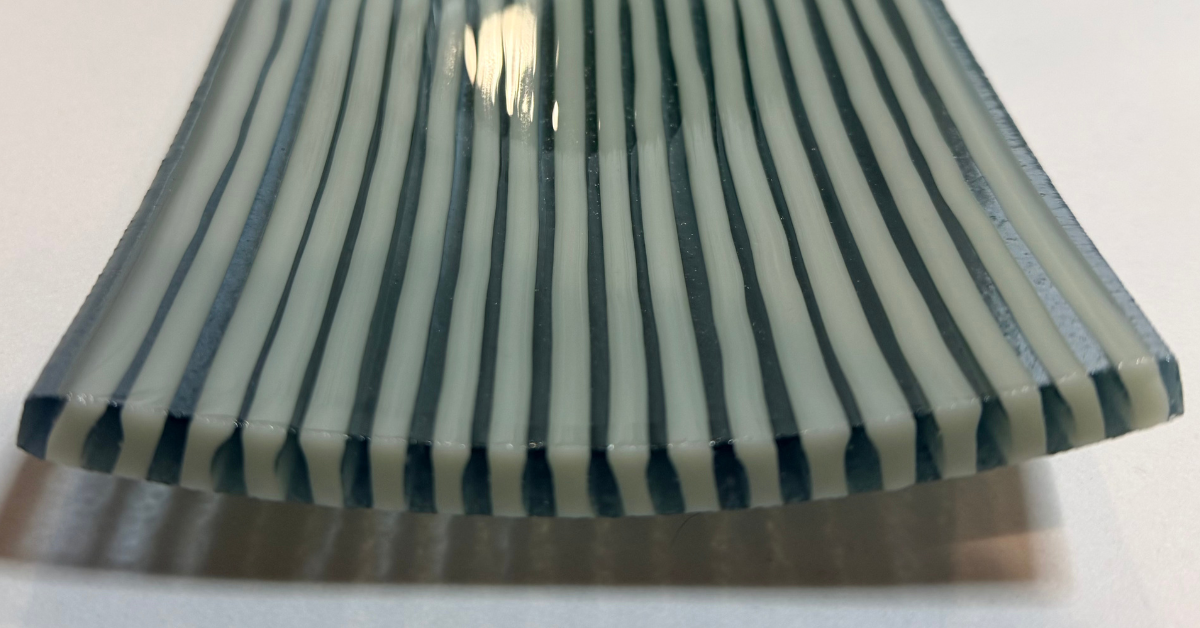
We love the mystery of the flow that happens when heating rods or sheets of glass, whether directly in a torch or inside the kiln. There is something magical about watching glass soften, bend, and move under heat. It’s no secret that the chemistry of that chase between heat and material drives much of the excitement in creating art with glass.
But many glass techniques don’t truly reach their final form in the heat.
They reach it in the cold.
This process and creation find their true refinement in what we call cold working.
Cold working is the step where we stretch the possibilities of the glass medium beyond the kiln or torch. It’s where we refine edges, alter surfaces, remove material, and introduce texture. It’s where the piece begins to transition from something that has been made to something that feels finished.
The Intimidation of “Finished”
Recently I’ve been playing with the idea of showing some of my pieces in a gallery or local show. Even writing that sentence feels a little intimidating.
In my twenties, I spent time around artists who worked tirelessly to take their paintings and sculptures to the next level so they could be exhibited in galleries. At the time, this seemed like a very big deal.
Not just because of the artistic talent involved.
But because of the commitment required.
Creating the body of work was only the first step. Artists would then go through the process of applying to shows, curating their pieces, and submitting their work to be judged for acceptance. Watching that process from the outside felt almost gut-wrenching.
That topic, the vulnerability of sharing your work, probably deserves a blog post of its own.
But before we get there, we need to go back to the beginning.
Because preparing a piece for a show often starts with something much simpler:
Finishing the work.
Over the years I have made many glass pieces.
I have to admit that my process is a bit disjointed and not always predictable. For this topic though, let’s agree that the general process starts with ideation, creation and experimentation. For me this happens through sketching, building patterns and just starting to build on ideas – often right on the kiln shelf.
This process involves all of the normal creation: Cutting glass, dusting frit and powder, placing vitro graph and murrinis and even painting with enamels and other components. All of creation from layering of colors, pulling canes, shaping glass in the torch and ultimately annealing a piece in the kiln and even slumping them into a new shape culminated into what I believed to be a finished piece.
Interestingly enough, though, very few of those pieces were truly finished.
Wait… what?
Yes.
I would go through the entire creative process — idea to design to firing — and stop just short of what might have elevated the piece even further.
The finish.
Cold Working – Not my first Rodeo
One of my first pieces that truly required cold working was in a class where I was challenged to create a large piece that required at least three different fused glass techniques in a single project.
One of the steps had to be a cold working process. It was clear in the planning and creation of this piece that without the cold working component, this piece was not going to be complete.
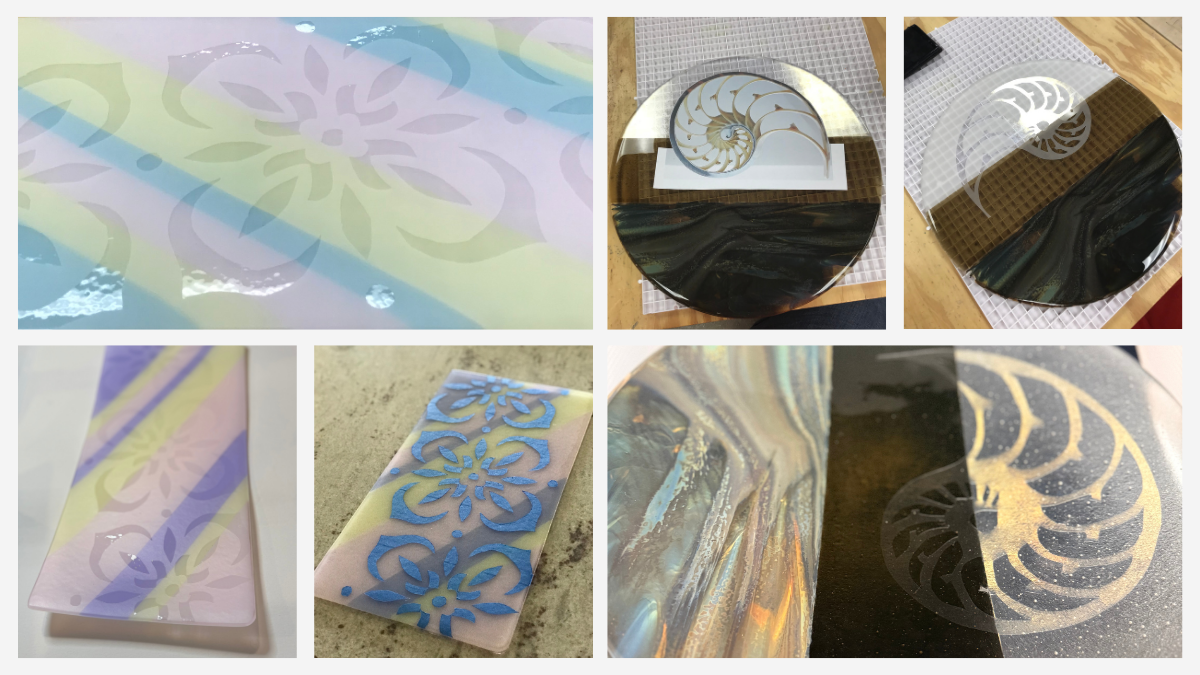
For this piece, I decided to incorporate sandblasting as the cold working element. The process allowed me to remove surface material in controlled areas, creating texture and contrast that simply wouldn’t have been possible in the kiln. It also meant being uncomfortable removing part of the piece – something that up to this point was not the approach I had taken in creating my pieces. My pieces were built on adding components not taking them away.
In this project and one other, the take away of material became transformative for me. Not only was it fun (and admittedly a little addictive), it completely changed the artistic dimension of the pieces.
What had been an interesting glass object suddenly had depth and intention.
That moment changed how I began thinking about cold working and why many glass artists skip cold working.
Cold working is not fast.
It’s not glamorous.
And it certainly isn’t effortless.
Cold working is meticulous work. It requires patience, repetition, and attention to detail. You remove material slowly. You refine surfaces gradually. And you often spend more time finishing a piece than you did creating it in the kiln.
For a long time, I found myself skipping this step. It seemed to me to be too tedious and there didn’t seem to be a return on that investment.
Skipping this process for me was at times purely impatience mixed with a bit of laziness.
Who would know? Would they appreciate this part of the process?
And more often for me it was simply the excitement of moving on to the next idea waiting in the studio.
Instead of embracing the finishing process, I found myself designing pieces that simply didn’t require it.
But over time I began to realize something important. Cold working can transform and add dimension to the piece.
For perspective consider paintings. Not all paintings require a frame. But the frame can elevate the piece in ways that transform how it is experienced. The same is true for cold working glass.
Technically, the artwork can exist without it.
Cold working smooths the edges, refines surfaces, adds texture, and sometimes completely reshapes a piece. In the polish process it uncovers depth and clarity and signals that the work has moved beyond the stage of experimentation and into the realm of intentional craftsmanship.
It tells the viewer, and the artist that the piece is truly complete.
In this Texas Glass Girls series, Mastering Coldworking: The Art of the Finish, we’ll explore:
- Why cold working matters
- When a piece benefits from cold working
- The tools used in a cold working studio
- Which tools solve specific finishing challenges
- Techniques that transform glass surfaces and edges
Along the way, I’ll be sharing examples from pieces I’m currently working on in the studio — real projects that demonstrate how these techniques come into play.
Some will work beautifully – I hope.
Some will be learning experiences.
But that’s part of the process.
Because mastering cold working isn’t just about tools.
It’s about learning to slow down long enough to finish the art.
– Tanya